License Renewal and Your Insurance
Renewing your license doesn't raise your insurance by itself, but what the renewal reveals about your driving can.
A license renewal that came with a vision test
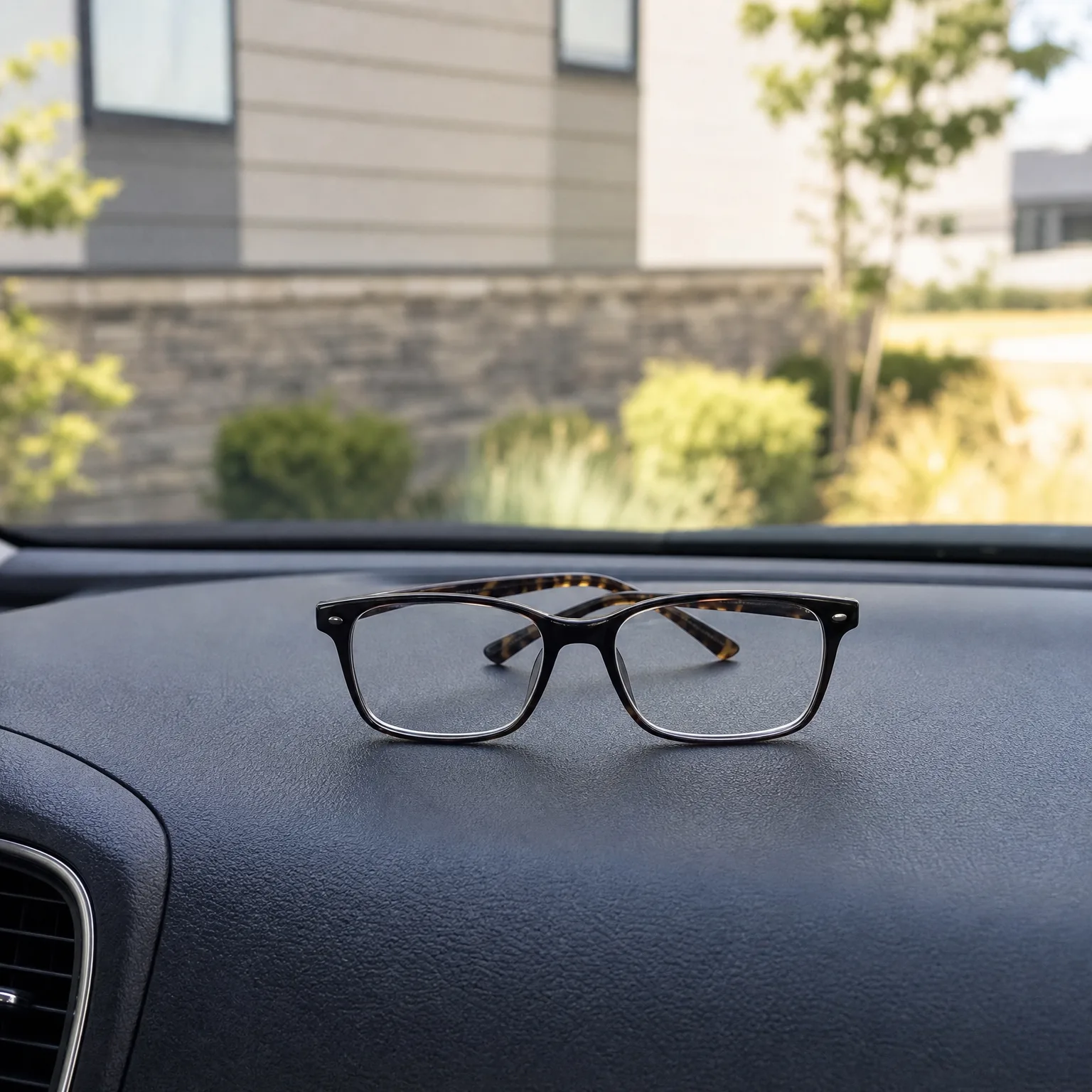
A driver in her early 80s went to renew her license and was asked to take a vision test, something that hadn't happened at her last renewal. She passed, but the extra step worried her enough that she called her insurer to ask whether the renewal itself would show up on her policy and push her rate higher.
Her agent explained that the state shares license status with insurers, not test details, so a renewal with restrictions, like needing corrective lenses, would be noted but a clean renewal would not change anything on its own. She asked about a defensive driving course after hearing it might help her case, took one that summer, and brought the completion certificate to her insurer. Her rate held steady at the next renewal instead of rising the way it had the two years before.
Will my insurance company find out if my license gets restricted?
Yes, in most states insurers can check your license status, and a new restriction like a daytime-only rule or a corrective lens requirement will typically show up at your next renewal or when they run a routine check. This isn't automatic and isn't instant, but you shouldn't count on it staying hidden.
The better move is to tell your insurer yourself once a restriction is added. Insurers generally respond better to a driver who reports a change and explains how they're adapting than to one they discover has an unreported restriction. If the restriction fits how you already drive, mention that too, since it often matters more than the restriction itself.

Telling your insurer about your license renewal
If you do
You give them current, accurate information, which is what your policy requires anyway. If your renewal came with a restriction or a course certificate, this is your chance to show you're adapting responsibly. Most of the time nothing changes, but you avoid any question later about whether you disclosed properly.
If you don't
Your policy stays as is until your insurer checks your license status on their own schedule, which varies by company. If they find an unreported restriction later, you could face a sudden rate change or questions about the policy. You also lose the chance to explain the context yourself.
Now that you know what your license renewal does and doesn't change, compare quotes to see where you actually stand.
Why license renewal and insurance pricing aren't the same thing
Your driver's license and your car insurance policy are handled by two different systems that don't automatically talk to each other in real time. The state renews your license based on your ability to drive safely right now, which might mean a vision check or a road test. Your insurer prices your policy based on risk, which it estimates from your driving record, claims history, and sometimes your age bracket. A renewal is a data point insurers can look up, not a price trigger they apply directly.
What actually moves your rate is what the renewal might reveal. A clean renewal with no restrictions tells an insurer nothing new. A renewal that adds a restriction, requires a retest, or comes with a shortened renewal cycle can signal higher risk, and that's what gets reflected in pricing, not the renewal event itself.
This is also where the biggest state-by-state differences show up. Some states require more frequent renewals or vision tests starting at a certain age, others don't, and insurers in different states have different rules about how often they check license status. What counts as a meaningful change in one state might not even be visible to your insurer in another. Check with your state's licensing agency for what your renewal actually involves, and ask your insurer directly how and when they review license information.
The cases where this works out differently usually involve a lapse or a gap, like letting a license expire before renewing it, which can read as a red flag even if your driving was never in question. Keeping your renewal current and on schedule avoids that entirely, regardless of what the renewal itself contains.

Does taking a defensive driving course actually lower my rate?
Often yes, but it depends on your insurer and your state, so ask directly rather than assume. Many insurers offer a discount for completing an approved course, and some state programs are built specifically for older drivers renewing their license. Check whether your state has an approved list of courses, since an insurer may not credit one that isn't on it. The discount size and how long it lasts also vary, so ask upfront.
Can my insurer drop me because of my age alone?
No, insurers generally can't cancel a policy based on age by itself, since pricing and eligibility are supposed to be based on driving risk, not a birthday. What can affect your policy is a change in your actual driving record or license status, like a new restriction or a citation. If you're ever told age is the reason for a non-renewal, ask for the specific underwriting reason in writing, since rules on this vary by state.
Should I tell my insurer before my license renewal or after?
After, once you know the actual outcome, since telling them before gives them nothing concrete to act on. What matters to your insurer is what the renewal produced, a clean renewal, a new restriction, or a required retest, not the fact that a renewal is coming up. Once you have the result, report any material change promptly, especially a restriction, since that's the information your policy likely requires you to disclose.