What Is the Best Way to Check Blind Spots While Driving
Turn your head and look over your shoulder before you move, every time, because mirrors alone can't show you everything beside your car.
Changing lanes on a four-lane road
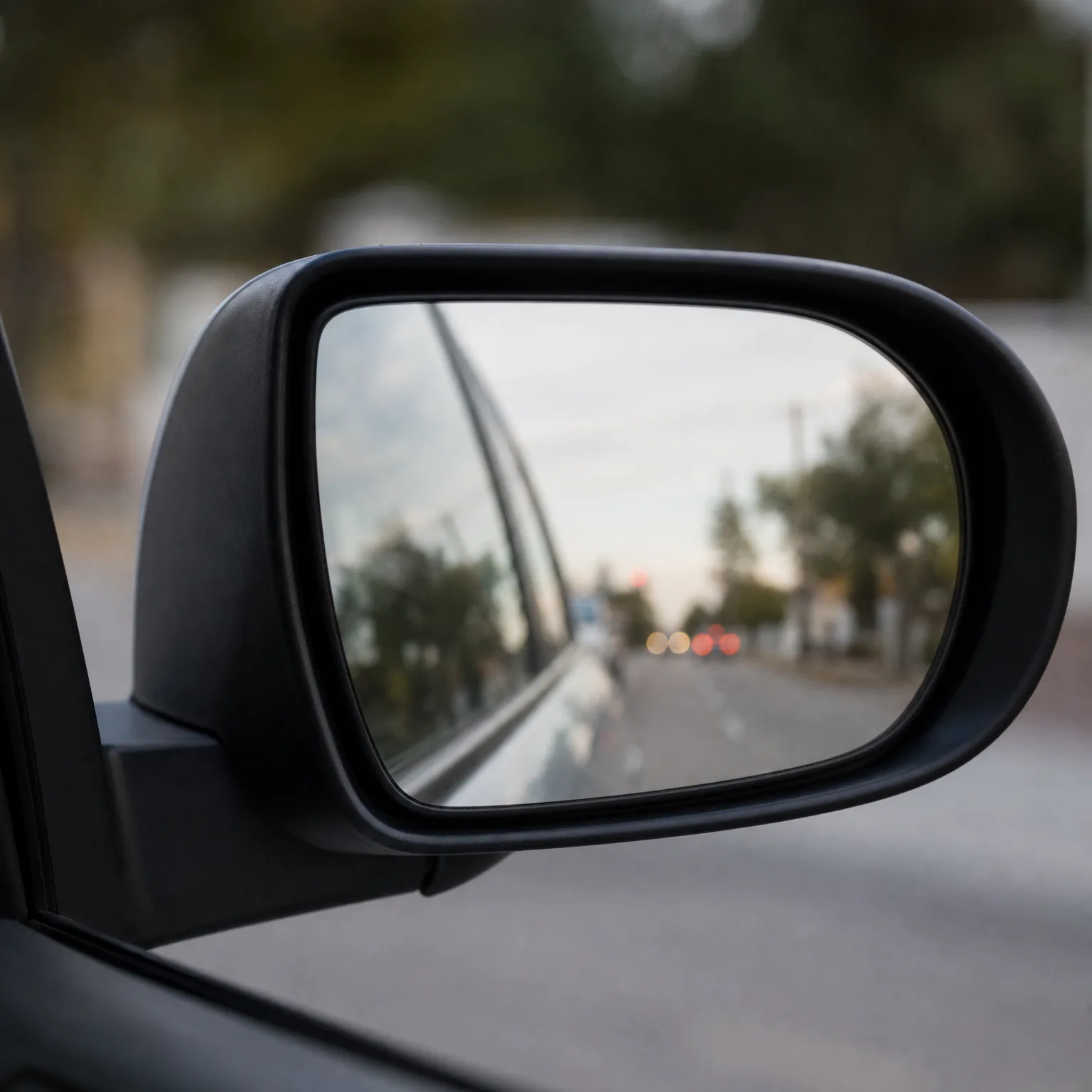
You're driving on a busy road with two lanes each way, and you need to move left to make a turn coming up. You check your rearview mirror, then your side mirror, and the lane next to you looks clear. Before you signal, you glance over your left shoulder for a half second, the way you've trained yourself to do for decades.
A car is sitting right where your mirror couldn't show it. You hold your lane, let it pass, then signal and move over once the space opens up. Nothing happened, and that's the point. The shoulder check caught what the mirror missed, and you made the turn a few seconds later instead of making it the wrong way.
Does a shoulder check still matter if my mirrors are adjusted correctly?
Yes, because even perfectly adjusted mirrors leave a gap on each side of your car where another vehicle can sit without showing up in any mirror. That gap is what people mean by a blind spot, and it exists no matter how new your car is or how carefully you've set your mirrors.
A shoulder check closes that gap for the one second it takes. It's not a backup for bad mirror alignment, it's a separate step that catches what good mirror alignment still can't show you. Drivers who skip it are relying on mirrors to do a job mirrors were never able to do completely.
Making the shoulder check part of every lane change
If you do
You catch vehicles, cyclists, and motorcycles that your mirrors physically cannot show you. Merging and turning become safer and more predictable, and other drivers see your signal and your head movement together, which makes your intentions clearer. Over years of driving, this habit is one of the things keeping you collision-free.
If you don't
You're trusting a gap in your mirror coverage to stay empty every time, which it won't always do. A car, cyclist, or motorcycle can sit in that space invisibly, and a lane change at the wrong moment turns into a sideswipe. It's one of the most common and avoidable crash types on the road.
With your blind spot check locked in, compare quotes to see how insurers reward a careful driving record like yours.
What a proper blind spot check actually involves
- Mirror setup first Your mirrors need to be set wide enough that they barely show the side of your own car. If they're angled too far inward, you're duplicating your rearview mirror instead of covering the blind spot.
- The head turn itself A quick glance over your shoulder in the direction you're moving, timed right before you signal or turn. It only takes a second, and it should become automatic rather than something you have to remind yourself to do.
- Timing with your signal Check your shoulder right before or as you signal, not after you've already started moving. This gives you a clear picture before your car commits to the lane change.
- Watching for motorcycles, bikes Smaller vehicles are easier to lose in a blind spot than cars are. Give your check an extra beat when you know cyclists or motorcycles are likely nearby, like on routes near schools or bike lanes.
- Keeping the habit consistent Do the check every time, not just on highways or in heavy traffic. Crashes from skipped checks often happen on familiar, low-traffic roads where drivers assume they already know what's there.
Why mirrors alone were never going to be enough
Mirrors show you what's directly behind and partly to the side, but the geometry of a car means there's a wedge of space beside each door that no mirror angle can capture. This isn't a flaw in your mirrors or a sign they need adjusting differently. It's just how flat and curved surfaces reflect light, and every vehicle has this gap in some form.
A shoulder check works because it uses your own field of vision instead of a reflection, and for that one second you're seeing the space directly rather than relying on an image of it. That's why it catches things mirrors miss, especially smaller or slower-moving vehicles that can sit unnoticed in that wedge for longer than you'd expect.
Where this plays out differently is speed and traffic density. On a slow residential street, the consequence of a missed check is usually smaller because other vehicles have more room and time to react. On a fast road or in heavy traffic, the same missed check can turn into a serious collision because there's no time to correct course. This is also why some newer cars include blind spot warning systems, which use sensors to alert you to a vehicle in that space. These systems are a helpful backup, not a substitute, since they can miss things in certain conditions and shouldn't change whether you still turn your head.
State rules about what's tested during license renewal or road evaluations can vary, so it's worth checking what your state's licensing agency actually requires at your age if you're curious about how this habit gets assessed formally.
Do blind spot warning systems in newer cars make shoulder checks unnecessary?
No, they're a backup, not a replacement. These systems use sensors that can struggle in rain, heavy traffic, or certain angles, and they're not standard on every vehicle. If your car has one, treat it as an extra layer of safety, but keep doing the shoulder check as your main method, since that's the one you can rely on in every car you ever drive.
Will my insurer know or care if I still do shoulder checks properly?
Insurers generally don't observe individual habits like this directly, but they do look at your overall driving record, which reflects habits like this over time. A long record free of lane-change or merging collisions suggests consistent safe habits, including blind spot checks. If you're asked about safe driving practices during a renewal conversation, mentioning this habit as part of your routine can support that picture, though requirements for how this is assessed vary by insurer.
What should I do if turning my head is getting harder or more painful?
Talk to your doctor about it, since neck mobility can change gradually and it's worth addressing directly rather than skipping checks because they're uncomfortable. In the meantime, convex mirrors mounted on your side mirrors can widen your view and reduce how far you need to turn. Some drivers also adjust seating position to make the turn easier. What changes the answer most is how much mobility you've lost and whether it affects your overall ability to turn and react quickly.