Why Are My Eyes So Sensitive to Light at Night While Driving
Your eyes are taking in less light and clearing glare more slowly, and that's a normal part of aging, not a sign you should stop driving.
Your pupils and lenses change with age, altering how light hits you
The lens inside your eye yellows and stiffens slowly over decades. It scatters incoming light instead of focusing it cleanly, so oncoming headlights bloom into a glare instead of staying a sharp point. Your pupils also shrink and react more slowly as you age, letting in less light overall and taking longer to adjust when a bright source hits them. That combination is why a headlight that barely registered at fifty can feel like a flashbulb now.
There's also a retina effect. The cells that recover after a bright flash take longer to reset in an older eye, so the few seconds of blindness after a glare source passes stretch out longer than they used to. If you're driving at night and a truck's high beams wash out the road for a moment, that moment is genuinely longer for you than for a younger driver, and it isn't a sign of poor attention or reflexes.
Some of this varies by what else is going on with your eyes. Early cataracts make glare dramatically worse, as does dry eye, and some medications increase light sensitivity as a side effect. If the sensitivity feels sudden or much worse than gradual, that's worth mentioning to an eye doctor, since it can point to something specific and treatable rather than ordinary aging.
Insurers don't usually ask about glare sensitivity directly. What they do ask about, depending on the state and the company, is whether your license has restrictions like daylight-only driving, and whether your vision meets the standard at renewal. Check your own state's rules on that, since they vary.
A driver who adjusted instead of stopping
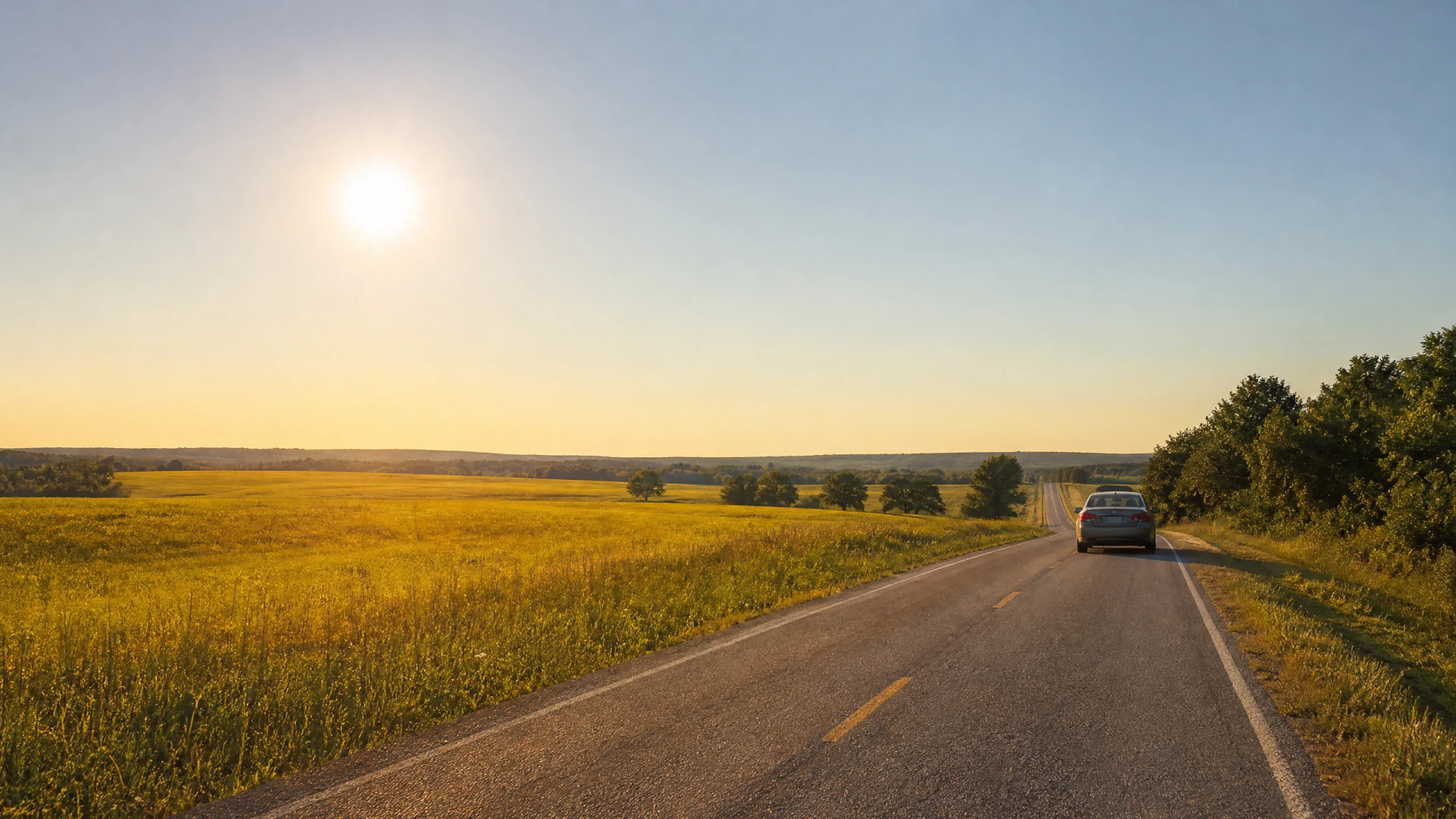
A woman in her early eighties noticed that oncoming headlights on the two-lane road to her grandchildren's house had started leaving a bright streak across her vision that took a few seconds to fade. She hadn't had any trouble seeing during the day, and her last eye exam had been a few years back. She wasn't ready to assume she needed to give up driving that route, but she also didn't want to ignore it.
She got her eyes checked and learned she had early cataracts, which explained the glare specifically. She also started avoiding that drive after dark, going earlier in the evening instead, and had her glasses prescription updated with an anti-reflective coating. The glare didn't disappear, but it became manageable, and she kept the independence of that drive without taking on a risk she wasn't comfortable with.
Could my license or my insurance rate be affected by this?
Not directly, and not just because you mentioned glare to someone. Most states test vision at license renewal using a basic standard, and if you meet it, the glare sensitivity itself isn't something that shows up on a form or triggers a restriction on its own.
Insurers set rates mostly using your driving record, your location, and broad age-based data, not a conversation you had with your doctor. The connection runs the other way. If sensitivity leads to a crash or a citation, that affects your record and then your rate. Address the glare itself, through an eye exam and adjusted habits, and you're protecting both your safety and your rate at the same time.
Once you've got a plan for handling glare, compare quotes to make sure your rate reflects the safe driver you are.

Whether you get your eyes checked for this
If you do
An eye doctor can tell you if it's ordinary aging or something like early cataracts, which is treatable. You'll get specific guidance, maybe a new prescription or a coating that cuts glare, and you'll know whether your night driving is genuinely safe to continue as is.
If you don't
The glare likely continues or slowly worsens, and you won't know whether it's something simple to fix or a sign of an eye condition. You're left guessing at adjustments like avoiding certain roads, without knowing if that's enough or more than you need.
Can I get my license restricted to daytime driving only because of night glare?
Yes, this is possible in most states, but it usually happens through a vision test or a doctor's recommendation, not automatically from reporting glare. Check your state's licensing agency for how restrictions are decided and whether vision specialists can request one on your behalf. If your glare is manageable with glasses or route changes, a restriction may not be necessary at all.
Do anti-glare glasses actually work for night driving?
They help some people meaningfully and do little for others, depending on the cause of the glare. If scattering from an aging lens is the main issue, an anti-reflective coating on your regular glasses often helps more than tinted night-driving glasses, which can actually reduce the light reaching your eyes. Ask an eye doctor what's driving your specific glare before buying anything marketed for this.
Should I avoid highway driving at night because of glare from headlights?
It depends on how long the glare blinds you and how quickly your eyes recover, which varies person to person. If a few seconds of washout feels manageable and clears before you'd need to react, highway driving can still be fine. If it leaves you uncertain where the lane is for several seconds, that's a sign to stick to local roads after dark instead.
This is a fixable discomfort, not a verdict on whether you should still be driving.