What Is a Safe Following Distance at 70 Mph
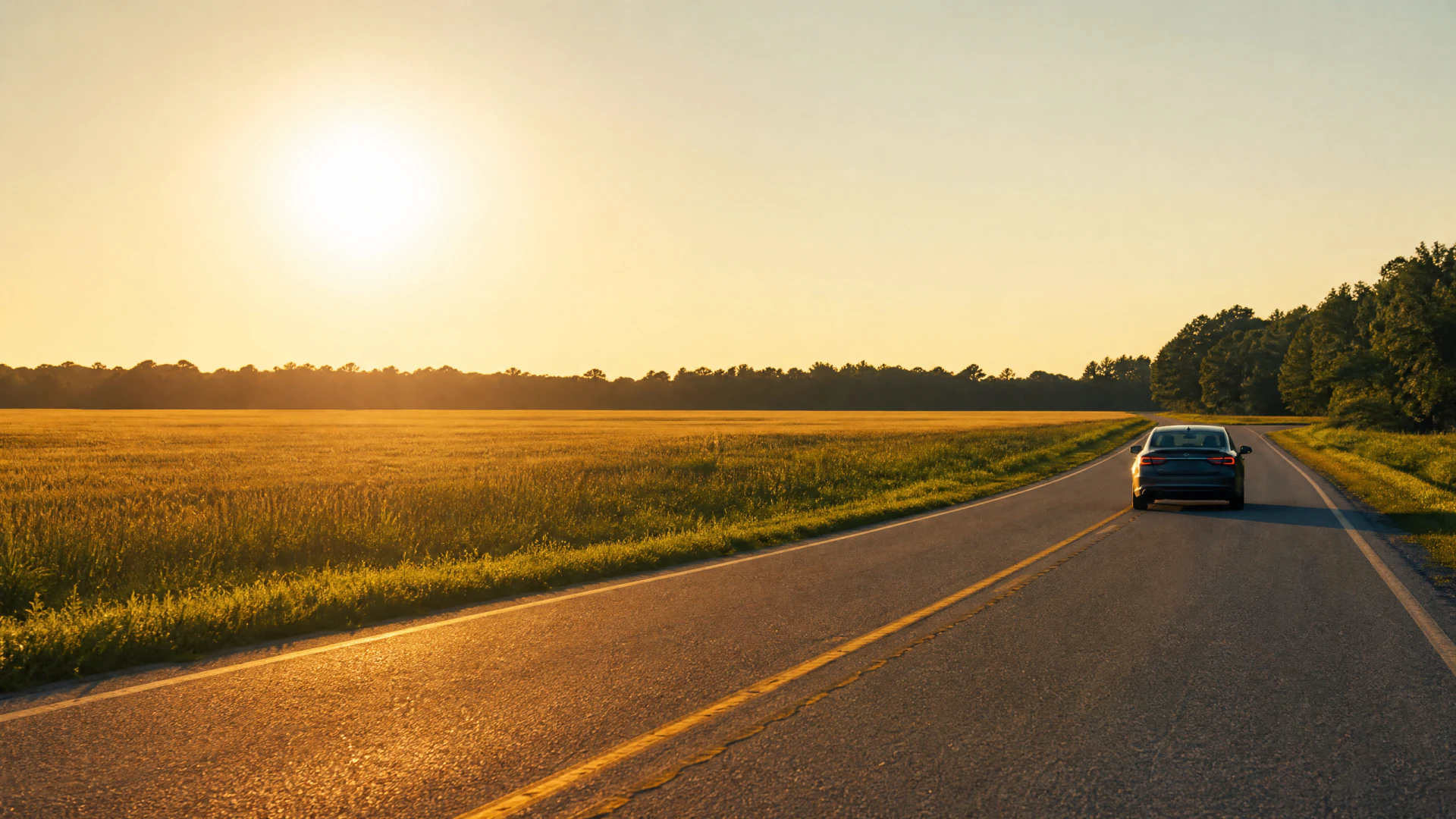
At 70 mph you need at least four seconds of space behind the car ahead, more in rain, fog, or heavy traffic.
Speed changes the math, so the gap has to grow with it
A following distance is really a time cushion, not a fixed length. At 70 mph your car covers a lot of ground every second, so the space you need to react, brake, and stop grows right along with your speed. The old advice of counting car lengths based on your speedometer reading was never precise, and it badly understates what you need once you're moving this fast.
Think about what has to happen before you even start slowing down. You notice the brake lights, your brain processes it, and your foot moves to the pedal. That reaction time alone eats up a good chunk of road at highway speed. Add the actual stopping distance on top of that, and a gap that might work in town becomes dangerously short on the highway.
Four seconds gives you room for that full sequence, reaction plus braking, with a little margin left over. It's not an arbitrary number. It reflects how long an average driver takes to respond and how far a car traveling at this speed needs to come to a stop under normal conditions. Wet roads, poor visibility, worn tires, or a heavier vehicle all push that number higher.
The cases where this works out differently usually involve something stacking on top of speed. Heavy traffic that might stop suddenly, a vehicle towing weight, or driving at night when your view ahead is shorter all call for more space, not less. The four second baseline is your starting point, not your ceiling.
How to judge your gap without doing math while driving
- Pick a fixed marker Watch the car ahead pass a sign, pole, or shadow on the road. Count seconds until you reach that same spot, and that count is your gap.
- Add time for weather Rain, fog, or ice all stretch your stopping distance. Add at least a second or two to your usual gap whenever conditions aren't clear and dry.
- Add time for load A full car, a trailer, or a roof rack changes how your vehicle handles and stops. Give yourself more room anytime you're carrying extra weight.
- Watch for tailgaters If someone closes in behind you, resist speeding up to create space. Ease off slightly instead so your own gap ahead stays safe.
- Recheck after merging Highway on ramps often compress your spacing without you noticing. Glance at your gap again once traffic settles after a merge.
With your following distance sorted, compare quotes to match your coverage to how you actually drive.
What if traffic won't let me keep a four second gap?
This happens constantly in heavy highway traffic, and it's one of the more frustrating parts of driving at speed. You can't force space that isn't there, but you can control how you respond to having less of it.
The practical move is to slow down slightly rather than squeeze into a shorter gap at the same speed. A small reduction in speed buys back some of that missing cushion. It also helps to scan further ahead than usual, past the car directly in front, so you catch brake lights and slowdowns a beat sooner. That extra warning time partly makes up for a tighter gap. If traffic is consistently bumper to bumper at 70, that's usually a sign the flow itself has slowed below that speed, and your gap should be judged against the real speed of traffic, not the posted limit.
Merging onto a highway behind a line of fast traffic
Say you're merging onto a highway where traffic is moving at 70 and the on ramp is short. You match speed as you merge, but the gap behind the car ahead looks tighter than you'd like. Rather than accelerating hard to squeeze in close, you ease into a slightly longer gap, timing it against a highway sign, and count out roughly four seconds between when that car passes the sign and when you do.
A few minutes later it starts raining lightly. You back off further, aiming closer to five seconds, since the road is slicker and your stopping distance has grown. Traffic ahead taps its brakes for a slowdown, and because you gave yourself that extra second, you have time to ease off smoothly instead of braking hard. The driver behind you has to brake harder than you do, which is exactly the position you want to be in on a wet highway at speed.
Does the following distance rule change for trucks or trailers?
Yes, heavier vehicles need more space because they take longer to stop. If you're towing or driving something larger than a typical car, add extra seconds to the four second baseline. Check your vehicle's handling and braking in normal conditions beforehand so you have a realistic sense of how much more room you personally need.
How does following distance affect who's at fault in a crash?
The vehicle that rear ends another is usually presumed at fault, because following too closely is seen as the failure to leave adequate stopping room. This presumption can shift if the lead car braked suddenly without reason or had a brake light out. Rules on this can vary by state, so check how fault is typically assigned where you drive.
Does my insurance rate go up after a following too closely ticket?
Often yes, since it's treated as a moving violation tied to unsafe driving. How much it affects your rate depends on your insurer and your state, along with your prior record. Check with your insurer directly, since some weigh a single minor violation much less heavily than others.