Where Not to Put a Dash Cam
Don't mount a dash cam where it blocks your view of the road, covers an airbag, or breaks your state's windshield rules.
The placement rules exist for your safety, not just the footage
A dash cam is only useful if it doesn't create a new hazard while it records. Anything mounted low in your direct line of sight, or stuck in the center of the windshield, shrinks the area you can actually see. That matters more at your age not because your eyesight has changed, but because the margin for a blocked view is the same for everyone, and insurers and license examiners both look at obstructed vision as a real risk factor.
Airbags are the other reason placement matters. Many windshields and visors have a sensor or an airbag path built in, especially near the rearview mirror. A dash cam mounted over or near that spot can interfere with how the airbag deploys, or the camera itself can become a projectile in a crash. Most manufacturers mark the safe zone in the manual, and it's worth checking before you stick anything up there permanently.
States also differ on how much of the windshield you're allowed to cover, and some restrict mounts to a small area behind the mirror. This isn't about your driving record or your age group, it's a general rule that applies to every driver in that state. Check your state's windshield obstruction law before you install anything, since a camera placed legally in one state can be a violation in another.
Finally, insurers care about placement because they care about the footage being usable. A camera angled too low, too high, or blocked by a sticker or sun visor won't capture a clear view of what happened. If you ever want that footage to support your side of a claim, a clean, unobstructed mount matters as much as owning the camera in the first place.
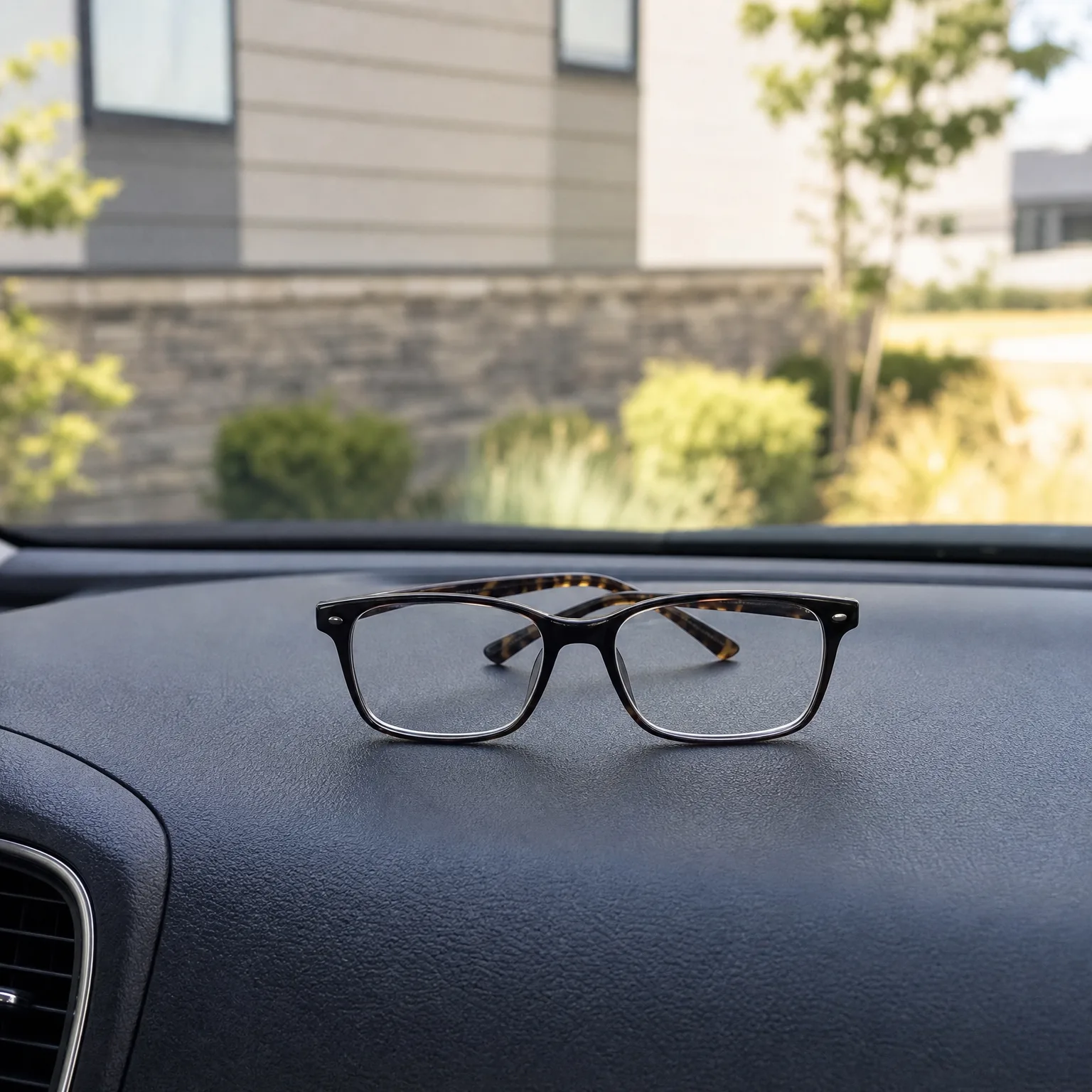
A windshield mount that caused more problems than it solved
A driver in her early 80s installed a dash cam herself, choosing a spot low on the windshield near the dashboard because it seemed out of the way and easy to reach for adjusting. It worked fine for daily driving, but a few months later she was rear-ended at a stoplight. When she pulled the footage to show her insurer, the angle was too low to clearly show the other car approaching, and part of the view was blocked by her steering wheel.
She later remounted the camera behind the rearview mirror, in the small strip most states allow, after checking her state's rule on windshield obstructions. The new angle gave a full view of the road ahead and matched what her mirror already showed her, so it stayed out of her sightline. The next time she had a minor incident, a driver backing out of a parking space clipped her bumper, the footage was clear enough that her insurer accepted it without dispute. The fix wasn't a different camera, it was simply moving it to where it belonged.

A dash cam only helps you if it's mounted where it can't hurt your view, your airbag, or your claim.
Once your dash cam is placed where it belongs, compare quotes to see if that footage can lower what you pay.

Mounting it in the legal, safe zone behind the mirror
If you do
You get a clear, usable view of the road that matches what you already see in your mirror. Your sightlines stay open, the airbag path stays clear, and if you're ever in an incident, the footage is strong enough for your insurer to accept without question or delay.
If you don't
A low or off-center mount can block part of your view, interfere with airbag deployment, or violate your state's windshield rules. If you ever need the footage, it may be angled wrong or partly obstructed, leaving you with a recording that doesn't clearly show what happened.
Does my insurer require a specific dash cam placement to accept footage as evidence?
Most insurers don't require a specific spot, but they do require the footage to be clear and unobstructed. Check your insurer's claims guidance or ask your agent directly, since some ask that the camera not cover any part of the windshield beyond what your state allows. What changes the answer is whether your state already restricts mount location, since that rule will apply regardless of what your insurer prefers.
Can a dash cam mounted in the wrong spot cause a ticket or inspection failure?
Yes, if it violates your state's windshield obstruction law. Some states limit mounts to a small area behind the mirror, and placing a camera outside that zone can result in a citation or a failed inspection in states that check for it. Check your state's specific obstruction rule, since the allowed area and how strictly it's enforced both vary. A larger or lower-mounted unit is more likely to cross the line than a small one tucked near the mirror.
Will a dash cam video actually lower my insurance rate if I have one installed?
Not directly, since a dash cam itself isn't usually a rate factor. What it can do is support your side in a dispute, which can prevent a rate increase you'd otherwise see after a claim where fault was unclear. Check with your insurer about how they use dash cam footage in claims review, since practices vary. The outcome depends on the incident and the footage quality, not on owning the camera.